 Director
August 13, 2026
10% off
On every direct hotel booking
5% off
On every direct food and table booking
 Director
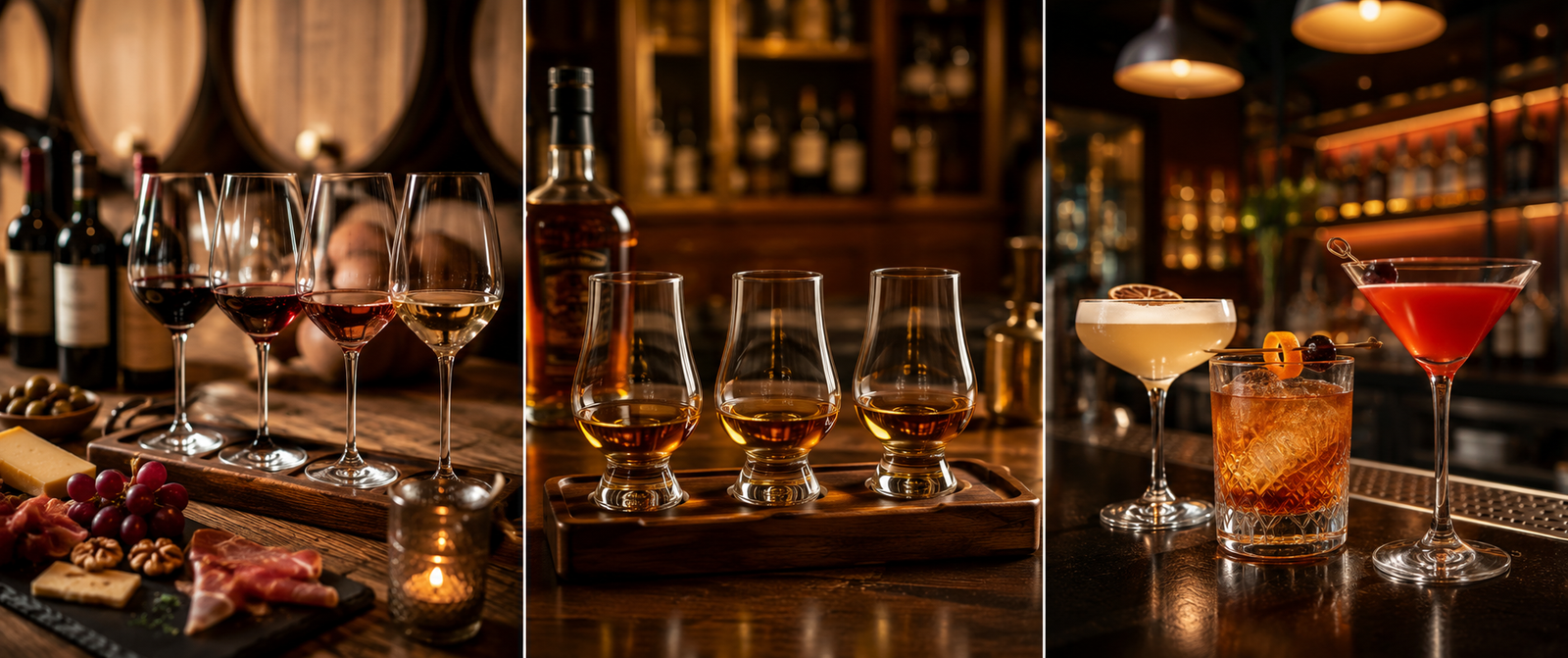
Wine tasting has a reputation for being intimidating — swirling glasses, technical vocabulary, and the fear of saying the “wrong” thing about a vintage. In reality, wine tasting in Gloucester has become one of the more relaxed and approachable ways to spend an evening, thanks to a growing number of local venues that treat it as an experience to enjoy rather than an exam to pass.
At Oakwood Hotel, just outside Gloucester in Twigworth, we regularly host guests who want to explore wine properly — not just order a glass with dinner, but actually understand what they’re drinking and why. This guide draws on that experience, written for people who want a genuine, no-nonsense introduction to wine tasting close to home.
Gloucestershire sits within reach of some of England’s most notable vineyards, and English wine more broadly has seen a significant rise in quality and reputation over the last fifteen years. That regional momentum has filtered into local venues, with more restaurants, hotels and independent wine bars around Gloucester now offering curated tastings featuring both English and international wines side by side.
This matters because it gives newcomers an easy comparison point. Tasting a cool-climate English sparkling wine next to a traditional French Champagne, for example, is one of the quickest ways to understand what “terroir” actually means in practice, rather than as an abstract wine-list word.
A well-run tasting typically works through five or six wines, moving logically from lighter whites through to fuller reds, and often finishing with something sweet or fortified. A good host will guide you through four simple steps:
You’re never expected to identify specific tasting notes correctly. The goal is simply to notice differences between wines and start building your own preferences — a genuinely personal process that no amount of textbook knowledge replaces.
Pairing is where wine tasting becomes genuinely enjoyable rather than academic. At Oakwood, our seasonal menus in The Grill are built with pairing in mind, using Gloucestershire produce to complement each wine’s structure and acidity rather than overpower it. A rich Gloucestershire beef dish, for instance, calls for a very different wine to a delicate fish course, and seeing that contrast play out on the plate teaches far more than any tasting note card.
For a more relaxed setting, The Pub offers a comfortable environment to try a curated wine flight alongside classic dishes, while The Drawing Room is well suited to a quieter afternoon tasting over coffee and something sweet.
Private wine tastings have become a popular choice for birthdays, engagement celebrations, corporate away-days and even relaxed hen parties. Unlike a set menu dinner, a tasting event is interactive by nature — guests talk, compare notes, and often discover a new favourite wine they’d never have chosen off a standard list.
Oakwood’s event spaces near Gloucester can host both small, intimate tastings and larger group celebrations, and for guests travelling from further afield, pairing the evening with an overnight stay in one of our rooms means nobody needs to worry about driving afterwards.
One of the most rewarding parts of wine tasting near Gloucester is the opportunity to try English wines that rarely make it onto supermarket shelves. English sparkling wine in particular has earned serious international recognition in recent years, often compared favourably to Champagne in blind tastings due to similar chalk-based soils and cool climate conditions found across southern and western England. Trying these wines locally, alongside more familiar international options, gives a much clearer sense of how genuinely good the English wine scene has become.
There’s real value in learning about wine somewhere relaxed and familiar rather than rushing through a tourist-focused tasting elsewhere. A local Gloucester wine tasting lets you return, build on what you learned last time, and gradually develop genuine confidence — without the pressure of a once-a-year holiday trying to cram in everything at once.
Whether you’re marking a special occasion or simply curious to learn more, wine tasting in Gloucester offers a relaxed, welcoming way to explore something new, in good company and without the pretension the subject sometimes carries.
No prior knowledge is needed. Tastings are designed to be accessible, and a good host will explain everything as you go, focusing on helping you notice differences between wines rather than testing your knowledge.
Most tastings include between five and six wines, usually progressing from lighter whites to fuller-bodied reds, and sometimes finishing with a dessert or fortified wine.
Yes, this is standard practice at most tastings. Using a spittoon allows you to taste more wines across the session without becoming overly affected by the alcohol, and no one will think it’s unusual.
It depends on the wine, but generally lighter whites suit fish and salads, while fuller reds pair well with richer, slow-cooked dishes. Many venues, including Oakwood’s Grill, design seasonal menus specifically to complement the wines being served.
Yes. Private tastings are a popular choice for birthdays, anniversaries, engagements and corporate events, and can usually be tailored in terms of wine selection, group size and setting.
Absolutely. English sparkling wine, in particular, has gained significant international recognition due to similar soil and climate conditions found in some of Europe’s most respected wine regions, making it a genuinely worthwhile addition to any tasting.
Most sessions run for around 90 minutes to two hours, giving enough time to properly taste, discuss and enjoy each wine without feeling rushed.
Yes, booking ahead is recommended, particularly for smaller or private tastings, as numbers are often limited to maintain a relaxed and personal atmosphere.
Thecappa Boutique Hotel